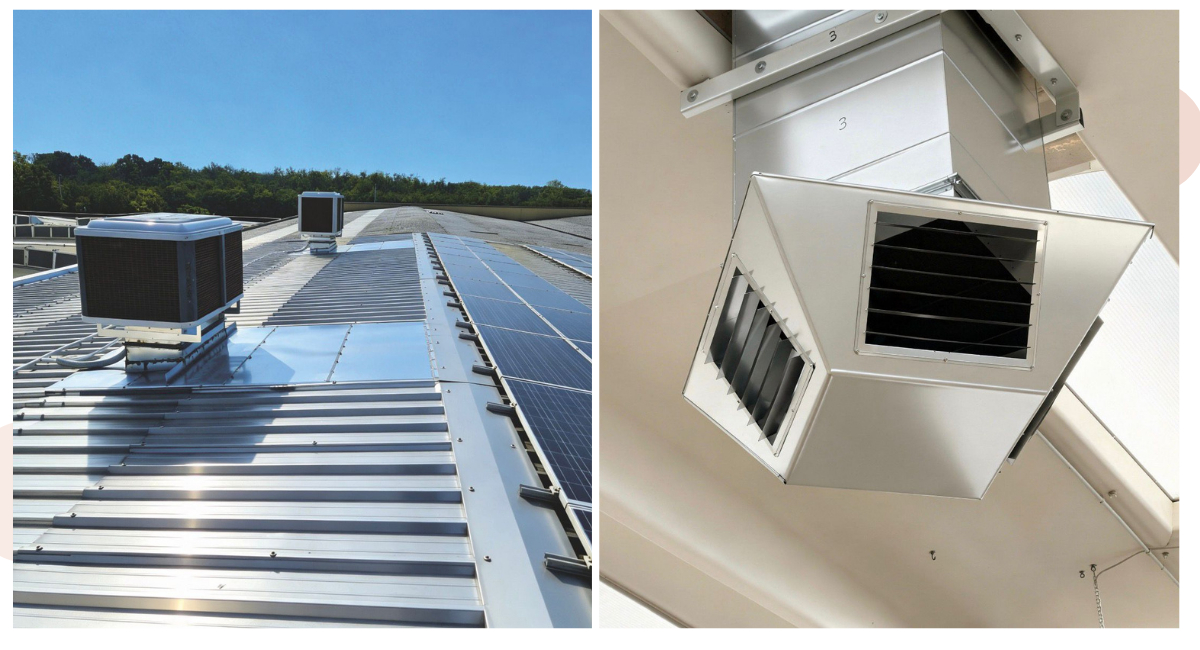
With rising summer temperatures and increasing attention to energy consumption, choosing the most suitable cooling system has become a priority for both residential and industrial environments. Among the most common solutions are evaporative coolers, air conditioners, and fans—three technologies that are often confused but are fundamentally different in terms of performance, costs, and environmental impact.
In this analysis, we clarify the main differences to help both companies and private users make an informed choice.
Differences between evaporative coolers, air conditioners, and fans
Three technologies compared
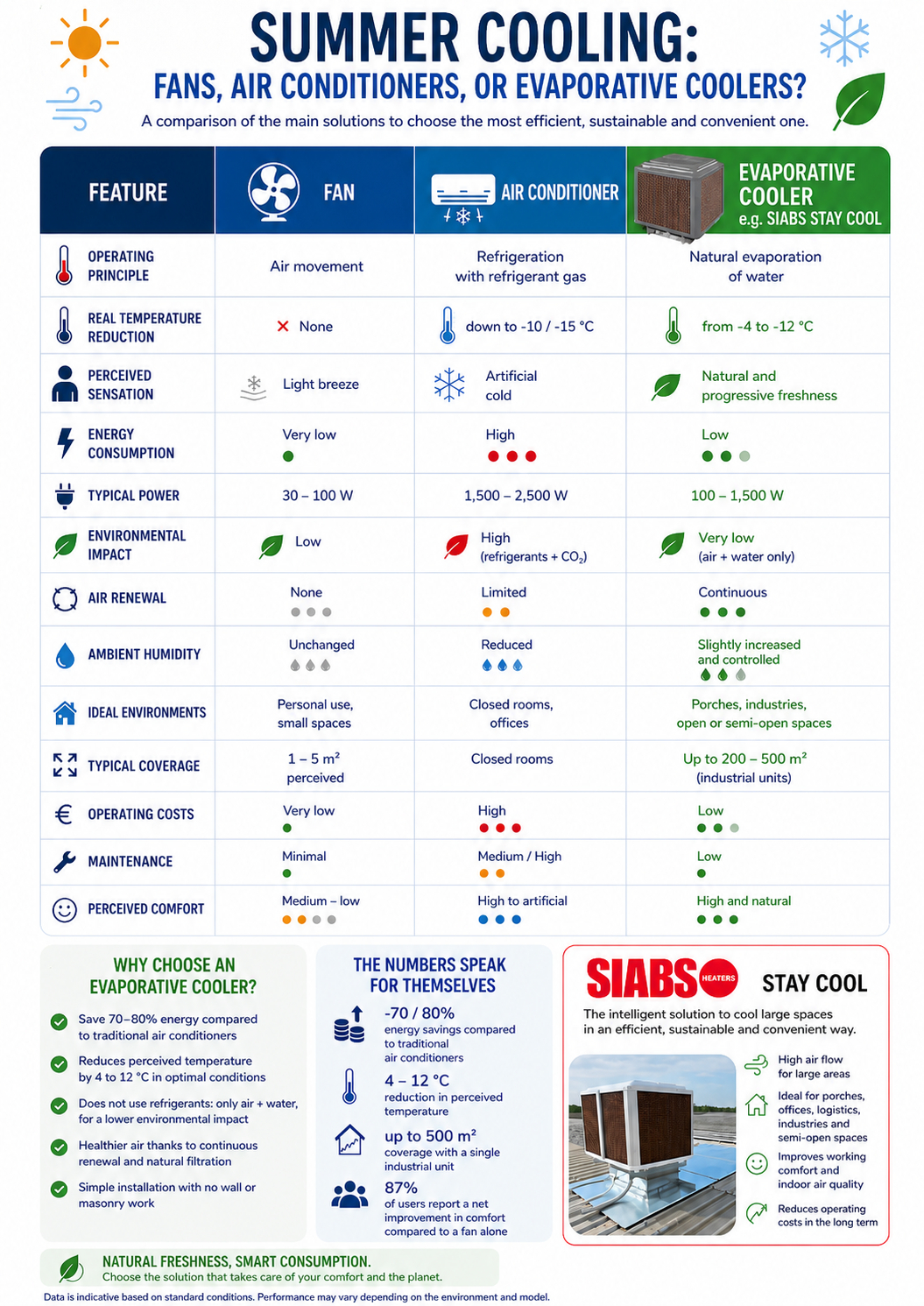
The fan remains the most economical solution, but also the least effective: it does not actually cool the air, it only moves it and improves the perception of heat.
The air conditioner is instead the most powerful system: it significantly lowers the temperature (by up to 10–20°C), but involves high energy consumption, complex installation, and the use of refrigerant gases.
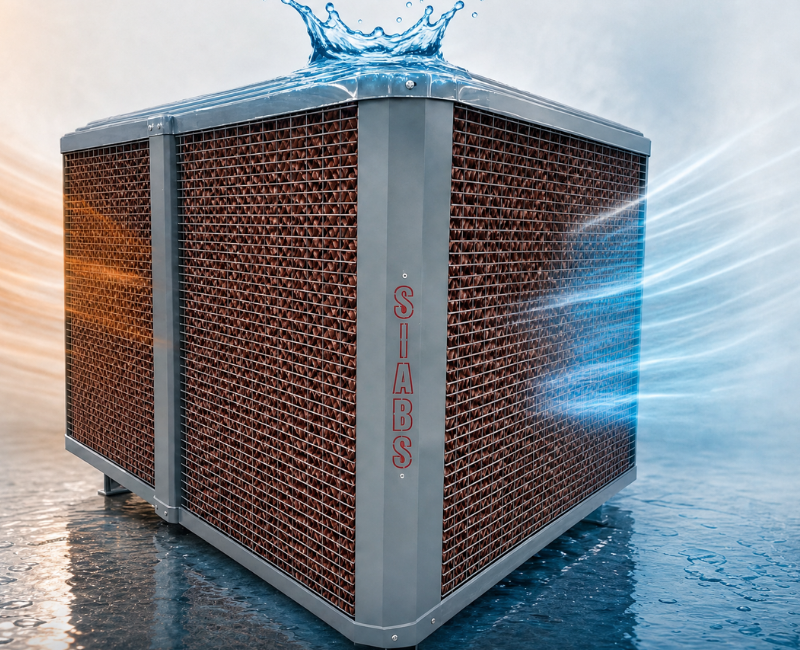
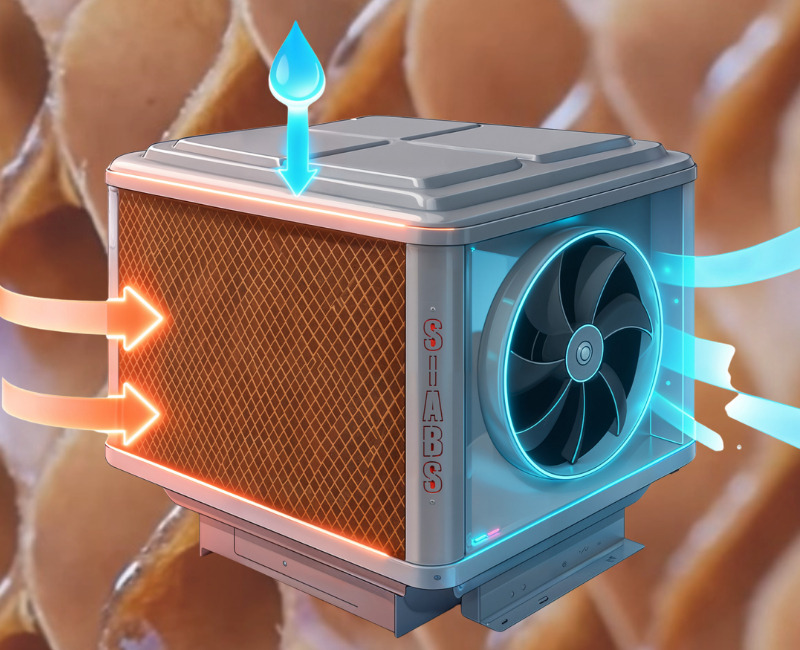
In between lies the evaporative cooler, an increasingly widespread technology that uses a natural principle: water evaporation to remove heat from the air.
Evaporative coolers: a growing solution
In recent years, evaporative coolers have been gaining ground, especially in industrial, commercial, and semi-open environments. The reason is simple: they offer a balance between performance, cost, and sustainability.
According to various industry studies, these devices can reduce temperatures by 5 to 15°C with energy consumption up to 80% lower than traditional air conditioners.
Below is a summary comparison of the three most widely used cooling solutions:
| Feature | Fan | Air conditioner | Evaporative cooler (e.g., Siabs Stay Cool) |
|---|---|---|---|
| Operating principle | Air movement | Cooling with refrigerant gas | Natural water evaporation |
| Actual temperature reduction | ❌ None | 🔵 High (up to -10 / -15°C) | 🟢 Medium (about -4 / -12°C) |
| Perceived sensation | Slight relief | Artificial cold | Natural and gradual coolness |
| Energy consumption | Very low | High | Low (up to -70/80% vs AC) |
| Typical power | 30–100 W | 1,500–2,500 W | 100–1,500 W |
| Environmental impact | Low | High (refrigerant gases + CO₂) | Very low (only air + water) |
| Air exchange | None | Limited | Continuous (constant fresh air) |
| Indoor humidity | Unchanged | Reduced | Slight controlled increase |
Evaporative cooler: efficiency and sustainability
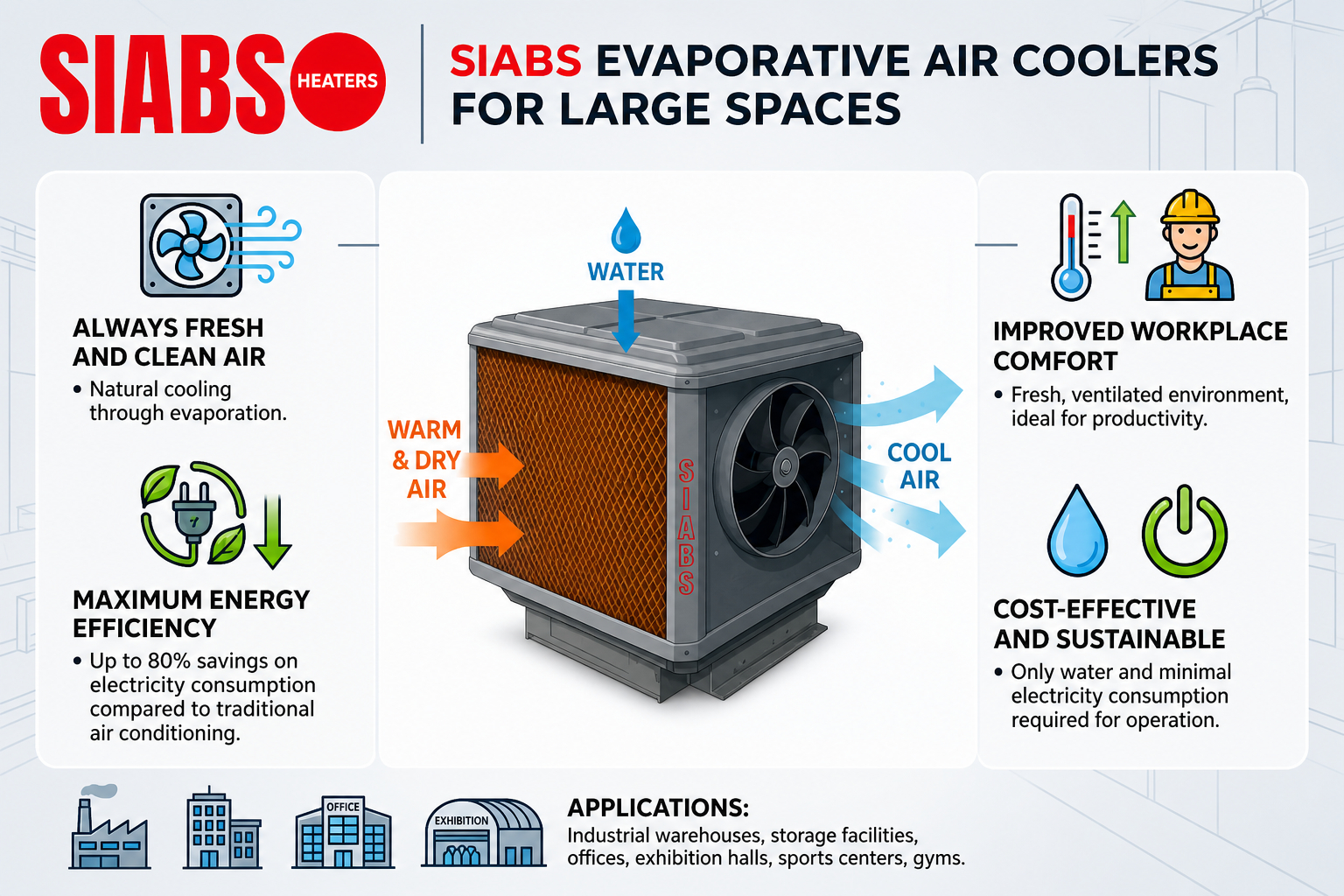
The evaporative cooler represents an intermediate solution between ventilation and air conditioning. It works through the natural process of water evaporation, lowering air temperature without the use of refrigerant gases.
Main advantages:
- Very low energy consumption
- No refrigerant gases
- Immediate installation and portability
- Ideal for semi-open or industrial environments
Air conditioner: maximum cooling power
The traditional air conditioner is the most effective solution in terms of temperature reduction, but also the most expensive in terms of energy consumption.
Strengths:
- High cooling capacity
- Precise temperature control
- Suitable for closed and insulated environments
Limitations:
- High energy consumption
- Cannot be used with doors/windows open
- Environmental impact due to refrigerant gases (F-gases)
Fan: the most economical solution
The fan does not actually cool the air but improves thermal comfort perception by moving air.
Features:
- Low purchase and operating cost
- Minimal energy consumption
- No installation required
It is ideal for temporary use or in environments where reducing the actual temperature is not necessary.
Which is the best solution?
The choice depends on several factors:
- Type of environment (open, closed, industrial)
- Available budget
- Need for actual temperature reduction
- Attention to energy consumption and sustainability
In a context increasingly focused on energy efficiency, evaporative coolers represent a balanced solution in terms of performance, cost, and environmental impact.
SIABS perspective
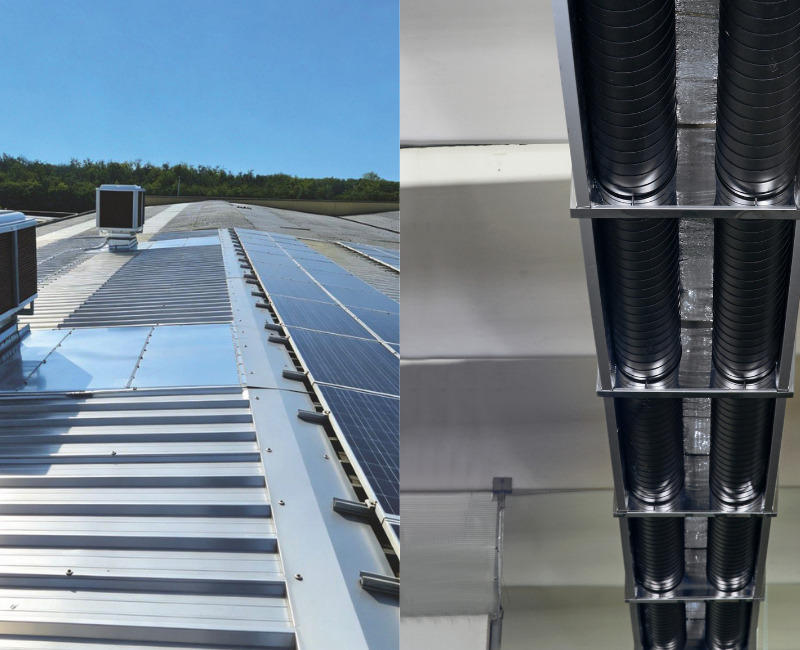
Within this scenario, solutions such as SIABS Stay Cool evaporative coolers are designed to provide efficient cooling even in large environments such as warehouses, workshops, and production spaces.
These systems focus on:
- High airflow capacity to cover large areas
- Long-term reduction of operating costs
- Improved working comfort and air quality
Their effectiveness is particularly evident in contexts where traditional air conditioning is too expensive or inefficient, such as open environments or spaces with continuous air exchange.
The best choice depends on usage:
- Fan → for immediate, low-cost relief
- Air conditioner → for closed environments requiring precise temperature control
- Evaporative cooler → for those seeking a compromise between comfort, savings, and eco-sustainability
An increasingly “green” trend
With rising energy costs and growing attention to sustainability, evaporative cooling is becoming one of the most interesting alternatives. It does not completely replace air conditioners, but in many cases—especially professional ones—it represents a smarter and more efficient choice.
In particular, solutions such as SIABS Stay Cool show how technology and sustainability can move in the same direction, offering effective cooling without impacting bills or the environment.
SIABS promotes industrial and professional cooling solutions focused on energy efficiency and sustainability. Proper evaluation of available technologies is essential to optimize consumption and improve comfort in working environments.